I've just started reading "Sensible Mathematics" by Steven Leinwand. It is required reading of district administrators in our district. (Side note: I love how it combines leadership principles with working towards changing content.) Chapter 2 is called "Making the Case for Change". To sum it up, it basically says that we are going to have to have our ducks in a row to change some of the teachers' minds about fully switching our mindsets to execute the CCSS.
As I was reading, I began to think about a few things which I wanted to share with you. We all know that we teach how we were taught. And we all know that we were not taught to be problem solvers like we are asking our teachers to teach now. We also know that many educators are very uncomfortable about this change, yet are unwilling to work towards solving the problems that are needed to make this change work. Hmmmm....here lies my conundrum.
We are going to ask "non-problem solving" educators to teach in a way that facilitates problem solving among their students. Now I'm scared.
Second...
Say we do convince the masses of educators to take a problem solving approach to teaching, will anything really change in the long run? Do I struggle so bad with finding people willing to not only pose problems, but solve problems because that have been given answers for so many years, or because much of the population of educators just don't want to take the effort to solve problems? Is it that many people don't know how to solve a problem...or do they just not want to solve the problem? If we teach our children to become problem posers and solvers, will they carry that skill with them into the work place? Do all current and future jobs really need problem solvers?
Finally...
I want to see a study done that determines whether some people are just bad problem solvers. Am I just a natural problem solver or have I just honed my skills? Is problem solving nature or nurture?
I know these are random thoughts, but isn't that what blogging is for?
Sunday, June 9, 2013

Monday, March 18, 2013
Morale is...
I've heard it said that, "Morale is trust in the leader."
Building the trust of a large staff is like trying to hold on to large amounts of sand with out any equipment to assist. You can try all you want, but it's just going to slip through our fingers in the end. You can labor and toil, but is it all for naught in the end? Okay, that may sound "downer-ish", but that's just the way I feel tonight. Now is a time I need wisdom, wisdom I haven't yet earned from stripes and scars and failures. I feel like I can give everything and make myself as available as possible and take risk after risk after risk, but it doesn't just guarantee trust.

The more I reflect on the above quote, the more I think about the stupid trust fall activities we would do at summer camp. However, those trust fall activities make sense now. If "morale is trust in the leader," then morale is not solely dictated by the actions of the leader. The group on the ground with their arms weaved together as a safety net can be ready to be trusted, can have said all the right things, can be as able bodied as a group made up of World's Strongest Man competitors. However, if the trusting person doesn't fall...then no morale will be built because no trust was given. Sure...you can push the faller, but that doesn't build trust, just relief from escaping death (or serious injury).
I truly feel that initiation of trust should be made by the leader. He should work to earn trust through integrity and self-sacrificing service. Trust, although, is not a one way street. Maybe morale isn't as much about the leaders actions as it is about the reciprocal trust from the followers. If the leader stands firm, is capable, consistent, available, and reliable then the burden of trust shifts to the follower.
What do you think?
Building the trust of a large staff is like trying to hold on to large amounts of sand with out any equipment to assist. You can try all you want, but it's just going to slip through our fingers in the end. You can labor and toil, but is it all for naught in the end? Okay, that may sound "downer-ish", but that's just the way I feel tonight. Now is a time I need wisdom, wisdom I haven't yet earned from stripes and scars and failures. I feel like I can give everything and make myself as available as possible and take risk after risk after risk, but it doesn't just guarantee trust.

The more I reflect on the above quote, the more I think about the stupid trust fall activities we would do at summer camp. However, those trust fall activities make sense now. If "morale is trust in the leader," then morale is not solely dictated by the actions of the leader. The group on the ground with their arms weaved together as a safety net can be ready to be trusted, can have said all the right things, can be as able bodied as a group made up of World's Strongest Man competitors. However, if the trusting person doesn't fall...then no morale will be built because no trust was given. Sure...you can push the faller, but that doesn't build trust, just relief from escaping death (or serious injury).
I truly feel that initiation of trust should be made by the leader. He should work to earn trust through integrity and self-sacrificing service. Trust, although, is not a one way street. Maybe morale isn't as much about the leaders actions as it is about the reciprocal trust from the followers. If the leader stands firm, is capable, consistent, available, and reliable then the burden of trust shifts to the follower.
What do you think?
Thursday, February 28, 2013
Quadrant A of the Rigor/Relevance Framework
This post is what I wrote for the curriculum section in our Friday Forecast sent out to the teachers. It is based on the Rigor/Relevance Framework from the International Center for Leadership in Education
 Curriculum in 300 words or less!
Reminders:
Rigor = higher order thinking, not more work. (Use Blooms and Webs DOK for verbs)
Relevance = learning in which students apply core knowledge, concepts, or skills to solve real-world problems.
Rigor/Relevance Framework is not a continuum. You do not progress through the 4 quadrants, but your instructional practices fit the mold of a single quadrant.
Today we are just going to focus on Quadrant A of the Rigor/Relevance Framework.
Quadrant A - “Acquisition” - Students gather and store bits of knowledge and information. Students are primarily expected to remember or understand this acquired knowledge.
Quadrant A’s position on the framework encompasses instruction requires students to understand, comprehend, and apply knowledge that can only be used or applied in one discipline. This box is titled “Teacher Work”. When instructional practices match best with the characteristics of this box, a classroom observer would find the teacher doing the majority of the work.
Examples of Quadrant A activities might be:
Writing spelling words three times each.
Completing a word search.
Calling out answers on math flash cards.
Looking through a story to answer non-rigorous questions.
Categorizing foods into various food groups.
Recalling various vocabulary terms.
Implications for Instruction:
Nothing is inherently wrong with instructional practices that fall in Quadrant A. Some standards that are set before us are close to impossible to apply to real world situations. When the questions comes, “why do we have to know this?” There may be no answer other than, “for the test.” Also, some standards use the verbs recall, define, solve, etc. which all fall in the lower levels of Bloom’s and DOK. At times, there is just no way around Quadrant A instruction.
Challenge:
Canvass your instruction and pinpoint the practices that match the characteristics of Quadrant A. Examine these practices and ask yourself the following questions: Why am I teaching this skill, standard, or student using these practices? What can I do to this activity to increase the level of rigor(think verbs)? What can I do to this activity to add knowledge that can be applied across disciplines and even used in real-world situations?
Reminders:
Rigor = higher order thinking, not more work. (Use Blooms and Webs DOK for verbs)
Relevance = learning in which students apply core knowledge, concepts, or skills to solve real-world problems.
Rigor/Relevance Framework is not a continuum. You do not progress through the 4 quadrants, but your instructional practices fit the mold of a single quadrant.
Today we are just going to focus on Quadrant A of the Rigor/Relevance Framework.
Quadrant A - “Acquisition” - Students gather and store bits of knowledge and information. Students are primarily expected to remember or understand this acquired knowledge.
Quadrant A’s position on the framework encompasses instruction requires students to understand, comprehend, and apply knowledge that can only be used or applied in one discipline. This box is titled “Teacher Work”. When instructional practices match best with the characteristics of this box, a classroom observer would find the teacher doing the majority of the work.
Examples of Quadrant A activities might be:
Writing spelling words three times each.
Completing a word search.
Calling out answers on math flash cards.
Looking through a story to answer non-rigorous questions.
Categorizing foods into various food groups.
Recalling various vocabulary terms.
Implications for Instruction:
Nothing is inherently wrong with instructional practices that fall in Quadrant A. Some standards that are set before us are close to impossible to apply to real world situations. When the questions comes, “why do we have to know this?” There may be no answer other than, “for the test.” Also, some standards use the verbs recall, define, solve, etc. which all fall in the lower levels of Bloom’s and DOK. At times, there is just no way around Quadrant A instruction.
Challenge:
Canvass your instruction and pinpoint the practices that match the characteristics of Quadrant A. Examine these practices and ask yourself the following questions: Why am I teaching this skill, standard, or student using these practices? What can I do to this activity to increase the level of rigor(think verbs)? What can I do to this activity to add knowledge that can be applied across disciplines and even used in real-world situations?
Thursday, February 7, 2013
Turning the corner...
Monday, February 4, 2013
Inquiry is...
...the way to go about teaching and learning in the 21st century and the 20th century and the 19th century and the 22nd century, etc.
I have been an administrator for just over 100 school days, so I am no self-confessed expert at being on of the chief instructional officers of a school. However, I do feel that in my short time as an admin I have renewed my passion towards inquiry-based learning. According to this website, "Inquiry is defined as "a seeking for truth, information, or knowledge -- seeking information by questioning."
For example, I watched my daughter the other night as she played with a few newly discovered toys. My daughter, Tinley, is a BEAUTIFUL 8 month old (I am definitely smitten in every sense of the word), so everything is very new to her. She heard the toy as I made it rattle, then she grabbed at it. She messed with it on a larger scale, swinging it back and forth and then began to pay closer attention to the different parts of the toy. She began to feel the textures, admire the bright colors, and even taste different parts. She was seeking for information as she interacted with the toy.
As I watched her, I couldn't help but think about the hours upon hours that children helplessly sit in desks neatly placed in rows or table groups as an adult pours out information just hoping that the little sponges will soak it all up so it can be squeezed out onto the upcoming high-stakes test. Tinley was so excited about her new discovery, most students are not.
How do we take the excitement that my 8 month old experienced and make it similar to the excitement that a multitude of students can experience each and every day inside the brick and mortar walls of a school? I feel the answer lies in an inquiry-based approach. Instead of funneling information into kids, funnel kids towards information. Create environments that allow for information seeking and finding.
The new buzz word in my district is student engagement. I truly believe that ALL students deeply long to be engaged. An inquiry approach will meet that students where they are and push them to where they need to be because an inquiry approach naturally makes things more rigorous and relevant, and relevance always brings about differentiation. If inquiry is seeking information, then usually it is because there is a problem to solve which creates a challenge that must be tackled with a project. If you look at it that way, then you have tackled project-based learning, problem-based learning, and challenge-based learning all in one big swoop! I'm sure there is more "buzz words" that inquiry involves, but that is all I've got for now.
I really do believe that inquiry is the only way to fully prepare our children for the 22nd century. The good thing is...children do it naturally. The bad thing is...we as adults always seem to get in the way.
Your thoughts?
I have been an administrator for just over 100 school days, so I am no self-confessed expert at being on of the chief instructional officers of a school. However, I do feel that in my short time as an admin I have renewed my passion towards inquiry-based learning. According to this website, "Inquiry is defined as "a seeking for truth, information, or knowledge -- seeking information by questioning."
For example, I watched my daughter the other night as she played with a few newly discovered toys. My daughter, Tinley, is a BEAUTIFUL 8 month old (I am definitely smitten in every sense of the word), so everything is very new to her. She heard the toy as I made it rattle, then she grabbed at it. She messed with it on a larger scale, swinging it back and forth and then began to pay closer attention to the different parts of the toy. She began to feel the textures, admire the bright colors, and even taste different parts. She was seeking for information as she interacted with the toy.
.jpeg) |
| This new toy is sooo cool! |
.jpeg) |
| Taking a picture break! |
.jpeg) |
| It's even got a tag! |
How do we take the excitement that my 8 month old experienced and make it similar to the excitement that a multitude of students can experience each and every day inside the brick and mortar walls of a school? I feel the answer lies in an inquiry-based approach. Instead of funneling information into kids, funnel kids towards information. Create environments that allow for information seeking and finding.
The new buzz word in my district is student engagement. I truly believe that ALL students deeply long to be engaged. An inquiry approach will meet that students where they are and push them to where they need to be because an inquiry approach naturally makes things more rigorous and relevant, and relevance always brings about differentiation. If inquiry is seeking information, then usually it is because there is a problem to solve which creates a challenge that must be tackled with a project. If you look at it that way, then you have tackled project-based learning, problem-based learning, and challenge-based learning all in one big swoop! I'm sure there is more "buzz words" that inquiry involves, but that is all I've got for now.
I really do believe that inquiry is the only way to fully prepare our children for the 22nd century. The good thing is...children do it naturally. The bad thing is...we as adults always seem to get in the way.
Your thoughts?
Tuesday, January 22, 2013
The Other Stuff...
Preface: our district is currently in the midst of the AdvancED recertification process. With this comes a ton of reflection, data analysis, and writing.
Much of my time the past few weeks have been consumed with "the other stuff." The "the other stuff" consists of things that takes me away from visiting classrooms and spending time with my "Boyz in the Wood" and researching best instructional practices and matching teachers with resources and being available to model and allowing time just to talk and committing total attention to whole child discipline. I am in no way minimizing the importance of "the other stuff". I lament the fact that it takes me from what I think matters. However, doesn't data analysis, reflection, and writing matter?
Much of my time the past few weeks have been consumed with "the other stuff." The "the other stuff" consists of things that takes me away from visiting classrooms and spending time with my "Boyz in the Wood" and researching best instructional practices and matching teachers with resources and being available to model and allowing time just to talk and committing total attention to whole child discipline. I am in no way minimizing the importance of "the other stuff". I lament the fact that it takes me from what I think matters. However, doesn't data analysis, reflection, and writing matter?
Tuesday, January 8, 2013
If failure isn't an option...
I like to think that I'm a risk taker. I like to think that I'm bold and live life on the edge. I like to think that change is good for me and will make me better. But I also like to think that I'm much better looking than I really am and can still keep up with 16 year olds in basketball. (Well I can keep up with 16 year olds on the court, but I pay for it in the morning. However, I'm still as ugly as I've always been ***see profile picture!)
Needless to say, what goes on in my mind and what really happens are two VERY different things. In all honestly, I like to play it safe. I like the guaranteed route. Like most educators, I want the greatest success with the list bit of resistance. Change is good, as long as it doesn't change me. I'm an education reformer that just happens to be closer to the "way we've always done it" mindset.
I can remember day after day preaching to my students about taking risks. Step out there and be willing to "fail successfully". (FAIL SUCCESSFULLY was an expectation in my classroom). However, rarely was I willing to step up to the plate. Rarely was I willing to put myself out there and do something that was edgy and offered an opportunity for failure. Likewise, rarely did I achieve excellence as a teacher...
 ...until I began to put myself in situations that afforded failure. I will admit, at first I was like a cat in a room full of rocking chairs. I was skiddish and still wanting t o hold on tight to the outcome. However, once I got my first taste of success...now I'm not just talking about about success as in a bunch of students making "A's". I'm talking about success when I looked at a piece of students work, their finished creation, their blood (yes I said blood), sweat and tears, and stood in awe of the amazing that I would have NEVER-not in a million year- created or thought to create. It gave me a rush. I have chills now just thinking about those times. Now, those times in my teaching were scary. I had a clue of what was going to take place. I'd plan and outline like crazy. I'd dream and hope and pray, but I would never allow myself to control the outcome (even though I wanted to oh so very badly).
My fear in education is that we have eliminated the option for failure. Failure for us and failure for the kids. We have grown so accustomed to cookie cutter ways; ways that are guaranteed; ways that have ALWAYS "worked". The elimination of failure has a residual affect as well. When the option to fail is removed so too is deep problem solving, any type of real world relevance, and even motivation. I guess this brings me to my final thought for this post: If failure isn't an option, than neither is excellence!
Needless to say, what goes on in my mind and what really happens are two VERY different things. In all honestly, I like to play it safe. I like the guaranteed route. Like most educators, I want the greatest success with the list bit of resistance. Change is good, as long as it doesn't change me. I'm an education reformer that just happens to be closer to the "way we've always done it" mindset.
I can remember day after day preaching to my students about taking risks. Step out there and be willing to "fail successfully". (FAIL SUCCESSFULLY was an expectation in my classroom). However, rarely was I willing to step up to the plate. Rarely was I willing to put myself out there and do something that was edgy and offered an opportunity for failure. Likewise, rarely did I achieve excellence as a teacher...
 ...until I began to put myself in situations that afforded failure. I will admit, at first I was like a cat in a room full of rocking chairs. I was skiddish and still wanting t o hold on tight to the outcome. However, once I got my first taste of success...now I'm not just talking about about success as in a bunch of students making "A's". I'm talking about success when I looked at a piece of students work, their finished creation, their blood (yes I said blood), sweat and tears, and stood in awe of the amazing that I would have NEVER-not in a million year- created or thought to create. It gave me a rush. I have chills now just thinking about those times. Now, those times in my teaching were scary. I had a clue of what was going to take place. I'd plan and outline like crazy. I'd dream and hope and pray, but I would never allow myself to control the outcome (even though I wanted to oh so very badly).
My fear in education is that we have eliminated the option for failure. Failure for us and failure for the kids. We have grown so accustomed to cookie cutter ways; ways that are guaranteed; ways that have ALWAYS "worked". The elimination of failure has a residual affect as well. When the option to fail is removed so too is deep problem solving, any type of real world relevance, and even motivation. I guess this brings me to my final thought for this post: If failure isn't an option, than neither is excellence!
Thursday, January 3, 2013
I was in a squirrel trap...
I am an outdoorsman. I love the outdoors; it is a supreme release for me and something my heart and body uses as medicine. On occasion, I will "harvest" animals. In regular city folk talk you'd say that I shoot and kill poor defenseless animals. I started my hunting hobby by hunting squirrels with a close buddy. Don't cringe too much, but YES I do skin, freeze, cook, and eat the squirrels that I harvest. One way I go about hunting squirrels is by using a trap very similar to the one in the picture. I have found that squirrels are absolutely addicted to bird seed. I mean to the point that I think that squirrels have BSA (Bird Seed Anonymous) Meetings somewhere in the tree tops. "Hello my name is Squire the Squirrel and I'm a Seed-aholic!" I have trapped as many as three squirrels in one day by using bird seed as my bait. I won't go into any further squirrel trapping details since it is so close to dinner time. However, I felt like this analogy was perfect for what I suffered through today.
I was chosen to be on the 2013 Math Textbook Adoption Committee for my district. I was honored to be considered valuable enough to be placed on such a prestigious committee, but I'm not sure that whoever placed me on it understands my background. I taught for 6 years at a WONDERFUL inquiry-based school that chose not to use textbooks. I was allowed to write my own pacing guide and make instructional decisions based on the needs of my students, not the textbook page we were required to complete.
As I sat in the 4 presentations, each an hour long, trying to practice the skills I am picking up from my current book, "The Lost Art of Listening," I could not help but to feel more and more paranoid that the doors in the room were going to shut and a loud voice was going to say in a slow country twang, "look -er boys, we got us her -notha one!" As each presenter (all apparently self-professing former teachers...clever) pitched their product as the best thing since they aligned sliced bread with the Common Core back in 2012 (gotta feed students brain food now), I started looking around for the bird seed.
The more the presenters talked, the more I realized how we continue to move further and further away from rigorous and RELEVANT instruction and fall deeper into the quick-fix curriculum trap. We have taken the same thing that students did in 1920 and dressed it up in a pretty cover, added an iPad app, some differentiated instruction, a few Tier 3 interventions, aligned it with the CCSS, sprinkle in some higher order thinking questions and called it innovative. Mr. Winkle would still feel comfortable! We fork over thousands of dollars for curriculum that doesn't meet the needs of this year's students and probably won't meet next year's needs either. We supplement with PD. We buy supplemental resources. We groan and grunt as, yet again, another program doesn't work. We're trapped again until the next adoption.
I am new to my school district. It is an amazing place, filled with amazing educators. I honestly feel that we are moving in the right direction by implementing data teams and the PLC model. I know that we HAVE to adopt a textbook, and since we will fork out a ton of money; we will HAVE to use it with fidelity across the district. I just get so skiddish about the use of textbooks as curriculum. I honestly feel that the kids should set the curriculum. The kids interests should guide how we use the standards, ESPECIALLY in math and language arts. It's hard to solve real world problems when you must be on page 107 by Thursday. I understand that some teachers need that guide. However, why don't we put our money into teaching those teachers how to make informed decisions about their students' needs rather than buying books that will, AT BEST, be used as dust collectors on shelves, book bag weights, or desk filler-uppers. We have already placed a significant amount of money into training for data teams and PLC's.
I could ramble on forever about this, what are your thoughts about the squirrel trap we are in?
Friday, December 28, 2012
Sharpening the Knife...

 A few Christmases ago I received a Lansky Knife Sharpening Kit so I could theoretically keep my hunting knives sharp and ready (I guess you can see how well I've done in practice). I busted out the kit on the 26th and went to sharpening my knife. The kit is designed to start out using a very course stone that begins that process of sanding down the blade and imperfections it may have. You progressively move towards a very smooth stones that, lacking for better words, polishes the blade making it razor sharp. It took me an hour or so before the blade was restored to factory sharpness. I can now, set the knife on a potato and, after applying the weight of my hand, slice the potato in two pieces.
As I meticulously rubbed the various stones on the knife blade in the required "W" formation, I had plenty of time to think. There are very few things that I have respect for more than a sharp knife. I take for granted the art a knife can create (delicious cuts of food, a wood carving, etc) and the chaos it can generate (bloody fingers or even death). The majority of a knife's life is spent sitting in a drawer waiting to be used, however a knife's job is to cut and cut well. When it doesn't cut, and cut well, it is useless; simply a piece of stainless steel with a handle. If I would have taken the time and energy to sharpen my knife on a semi-regular basis, I would have never had to struggle through cutting something as easy as a potato. I allowed the knife to become useless. This made me think about the great quote by President Lincoln, “If I had six hours to chop down a tree, I'd spend the first four hours sharpening the axe.”
I am currently in the process, as I have been for the past 2 months, of structuring my goals for 2013. These goals are an opportunity for me to sharpen myself. All the goals that I have are very un-glorious and lack spunk and excitement. However, I feel confident that if I can conquer the specific, measurable, attainable, reasonable, and timely (SMART) goals I have set, my knife will be sharp and ready for use.
The sharpening part is dull, meticulous, and often times boring, but when the time comes for use, it will be well worth it!
My 2013 Goals broken down into categories (I'll update, add, and modify):
Spiritual:
- I will read the Gospels in their entirety at least 3 times by the end of 2013 striving to learn more about Jesus Christ's life, ministry, and leadership.
- I will memorize and meditate on the "Sermon on the Mount" from Matthew 5-7 by the end of 2013. Averaging about 3 verses per week.
- I will read 4 books centered around Jesus by the end of the 2013. Averaging roughly 1 book per 3 months. (Christ Plays in 10,000 Places by Eugene Petersen, The Jesus You Thought You Knew by John MacArthur, and 2 others TBD)
Physical
- I will run 600 total miles (50 miles per month), log at least 244 activities (about 19 per month), and participate in at least 6 running races of any distance by the end of 2013.
Family
- I will read a bible story using the book given to us by the Dickenson family to my daughter at least three times a week before bedtime totaling about 150 reads in 2013.
Professional Learning (still have work to do)
School Leadership (Still have work to do)
Please share your comments!
Friday, November 2, 2012
That Friday morning, those kids taught me...
It all started out in typical Friday fashion. I was determined to have my ever growing to-do list chopped down by the end of the day. As a million thoughts rushed through my head, I hurried quickly back to my office to peck out some response emails, review a bus video, and set the plans for a future PLC, I was handed a small pink sticky note with a name and a number written on it. I was told that a lady had called and asked for an administrator to call her back; no other details were given. I grumbled under my breath as I walked the final few paces to my office, plopped down in my chair, and stuck the note on my desk. I resisted the urge to trudge through my to-do list, lifted the phone, dialed the number, and began to listen to the caller on the other end of the line.
The voice on the other end was gentle, yet it was easy to distinguish that hint of brokenheartedness that is felt rather than heard. The lady kindly introduced herself and, without knowing how to cordially lead us in, quickly plunged into the issue at hand. The lady on the phone was a concerned grandmother that was worried about her granddaughter. She began her story with a little background information about her little girl. She talked about how her girl had always loved school and seemed to really enjoy learning. She talked about how much she loved her and how she was her life. Her next word ate at my core. It's not that the word itself is bad. Granted it shows contrast, yet it usually goes unnoticed in conversations. Not this time. Not in this conversation. When this grandmother muttered the word "but," everything changed. Right after she said it, she had to apologize because she had begun to cry. She didn't have to tell me that she was crying, I could hear it in the trembling of her voice. I could feel the heavy heart from her words and occasional sobs. She illustrated for me a story of a little girl that has been constantly picked on for something that she can't even help. For a very common skin condition. She told me that her granddaughter had become the "cheese" of the infamous "cheese-touch" from the Diary of a Wimpy Kid series. She sobbed to me that her granddaughter who once loved school, who once couldn't wait to get to bed so she could wake up the next day, had to be pried out of the car on this typical Friday. That same girl who hung on the words that were spoken in class by her teachers and peers, cried herself to sleep at night because of the punch line she had become. As she talked, my head hung low, but not lower than my heart.
I concluded the phone call in a typical administrator fashion, but my heart hurt. There are times that you go through the motions; you follow policy, procedure, and protocol. You don't think, you just act. Then there are times that you're human. You feel, you hurt, you hope. After that call, I was human, humiliatingly human.
After hanging up the phone, I took a minute to get my thoughts together then called the little girl into my office. Other than the, "I don't think I did anything to get called to the office" look she gave me when she turned the corner in my office, her attitude was not what I was expecting. The little girl I locked eyes with was surprisingly chipper for someone who had to be dragged out of the car previously that morning. She merrily talked about her morning and how she liked her substitute, but misses her teacher when she's gone. After the formalities of introduction subsided, I asked her about some of the things her grandmother informed me about. She told an identical tale of being picked on since 1st grade. She told me the whys and hows and whats. Enraged at this point, I asked for the whos. Who in God's Holy name could be bullying such a sweet child...I thought to myself. I was going to deal with that bully or few bullies. I anxiously anticipated her answer, but was humbled by her response. This sweet little girl, with pain in her eyes, gazed at me and said, "Mr. Richards, it feels like half of the entire grade picks on me." I didn't think my heart could drop much lower than when I was on the phone with the grandmother, but believe you me, it did. I am known to be able to throw out a pretty good poker face. Very few things shake me, but there is no way that that little girl couldn't see the hurt in her eyes mirrored in mine. However, what happened next was the most amazing thing. Without even thinking, possibly in the same breath, she used that word...that same word that changed everything in the conversation with her grandmother. That same word that will again...change everything..."but!" "But Mr. Richards," the look in her eyes returning to the sparkle she displayed at the outset of our meeting, "there are some students in my class that never pick on me." "They've even stood up for me." She went on and on about the times they've helped her and how they make her happy and not sad like the other kids.
As she talked I zoned out. This was too much for me to process. Here is a girl who has been bullied for years, and all she can really talk about is the people that have come by her side. I asked for the students names and called them to my office. When the group arrived, I'm not sure what I was expecting, but I wasn't expecting the students that showed up. I'm not sure if the ingrained Hollywood image of heroes and heroines just has me messed up, but this was the rag-taggiest group of kids ever. Honestly, and this is sad for me to say, I'm not sure if I had ever even seen a few of the kids before that fateful Friday morning. I asked them all to sit down and gently shut my door. The lone boy in the room joyfully asked, "are we in trouble?!" I honestly didn't know how to respond. I sat down in my desk chair and stared face to face with six children. Six snaggle-toothed, pig-tail braided, breakfast stained shirt, crumb wearing kids...and I never felt more humbled. Here were six children, all under the age of 10, and five of them were heroes to one little girl. I am never at a loss for words, but I was then. I simply said, "thank you." After being asked why, I went into further details. I'm not sure what all I said to them, but I hope my heart came out as I said thank you.
They later left my office with smiles and headed back to class. I called each of their parents and thanked them for having them at Wood Elementary. Each parent was grateful for the call, but none more grateful than I was for having the opportunity to make the call. On that Friday morning, I sat face-to-face with five heroes. Five students that were willing to go against the grain. Five unassuming students that have made a huge mark on one child's life, and one administrators life, simply because they were willing to do what was right. That Friday morning, those kids taught me...
The voice on the other end was gentle, yet it was easy to distinguish that hint of brokenheartedness that is felt rather than heard. The lady kindly introduced herself and, without knowing how to cordially lead us in, quickly plunged into the issue at hand. The lady on the phone was a concerned grandmother that was worried about her granddaughter. She began her story with a little background information about her little girl. She talked about how her girl had always loved school and seemed to really enjoy learning. She talked about how much she loved her and how she was her life. Her next word ate at my core. It's not that the word itself is bad. Granted it shows contrast, yet it usually goes unnoticed in conversations. Not this time. Not in this conversation. When this grandmother muttered the word "but," everything changed. Right after she said it, she had to apologize because she had begun to cry. She didn't have to tell me that she was crying, I could hear it in the trembling of her voice. I could feel the heavy heart from her words and occasional sobs. She illustrated for me a story of a little girl that has been constantly picked on for something that she can't even help. For a very common skin condition. She told me that her granddaughter had become the "cheese" of the infamous "cheese-touch" from the Diary of a Wimpy Kid series. She sobbed to me that her granddaughter who once loved school, who once couldn't wait to get to bed so she could wake up the next day, had to be pried out of the car on this typical Friday. That same girl who hung on the words that were spoken in class by her teachers and peers, cried herself to sleep at night because of the punch line she had become. As she talked, my head hung low, but not lower than my heart.
I concluded the phone call in a typical administrator fashion, but my heart hurt. There are times that you go through the motions; you follow policy, procedure, and protocol. You don't think, you just act. Then there are times that you're human. You feel, you hurt, you hope. After that call, I was human, humiliatingly human.
After hanging up the phone, I took a minute to get my thoughts together then called the little girl into my office. Other than the, "I don't think I did anything to get called to the office" look she gave me when she turned the corner in my office, her attitude was not what I was expecting. The little girl I locked eyes with was surprisingly chipper for someone who had to be dragged out of the car previously that morning. She merrily talked about her morning and how she liked her substitute, but misses her teacher when she's gone. After the formalities of introduction subsided, I asked her about some of the things her grandmother informed me about. She told an identical tale of being picked on since 1st grade. She told me the whys and hows and whats. Enraged at this point, I asked for the whos. Who in God's Holy name could be bullying such a sweet child...I thought to myself. I was going to deal with that bully or few bullies. I anxiously anticipated her answer, but was humbled by her response. This sweet little girl, with pain in her eyes, gazed at me and said, "Mr. Richards, it feels like half of the entire grade picks on me." I didn't think my heart could drop much lower than when I was on the phone with the grandmother, but believe you me, it did. I am known to be able to throw out a pretty good poker face. Very few things shake me, but there is no way that that little girl couldn't see the hurt in her eyes mirrored in mine. However, what happened next was the most amazing thing. Without even thinking, possibly in the same breath, she used that word...that same word that changed everything in the conversation with her grandmother. That same word that will again...change everything..."but!" "But Mr. Richards," the look in her eyes returning to the sparkle she displayed at the outset of our meeting, "there are some students in my class that never pick on me." "They've even stood up for me." She went on and on about the times they've helped her and how they make her happy and not sad like the other kids.
As she talked I zoned out. This was too much for me to process. Here is a girl who has been bullied for years, and all she can really talk about is the people that have come by her side. I asked for the students names and called them to my office. When the group arrived, I'm not sure what I was expecting, but I wasn't expecting the students that showed up. I'm not sure if the ingrained Hollywood image of heroes and heroines just has me messed up, but this was the rag-taggiest group of kids ever. Honestly, and this is sad for me to say, I'm not sure if I had ever even seen a few of the kids before that fateful Friday morning. I asked them all to sit down and gently shut my door. The lone boy in the room joyfully asked, "are we in trouble?!" I honestly didn't know how to respond. I sat down in my desk chair and stared face to face with six children. Six snaggle-toothed, pig-tail braided, breakfast stained shirt, crumb wearing kids...and I never felt more humbled. Here were six children, all under the age of 10, and five of them were heroes to one little girl. I am never at a loss for words, but I was then. I simply said, "thank you." After being asked why, I went into further details. I'm not sure what all I said to them, but I hope my heart came out as I said thank you.
They later left my office with smiles and headed back to class. I called each of their parents and thanked them for having them at Wood Elementary. Each parent was grateful for the call, but none more grateful than I was for having the opportunity to make the call. On that Friday morning, I sat face-to-face with five heroes. Five students that were willing to go against the grain. Five unassuming students that have made a huge mark on one child's life, and one administrators life, simply because they were willing to do what was right. That Friday morning, those kids taught me...
Wednesday, October 17, 2012
The POWER of Home Visits...
Today I took two 4th grade teachers with me on a home visit to see a student in their class that they were worried about. The student wasn't home when we got there and never came while we were there, but we had the immense pleasure of speaking with his grandmother. When she opened the door, she wasn't sure what to make of the visit, but after we explained why we were there, she welcomed us with open arms. She continuously commenting on how great it was that we came and saw her.
After leaving the visit, the teachers were informed, relieved, and excited. It made me start thinking and reflecting about the power that a simple home visit has on the classroom all the way to school culture and community views of the district as a whole.
7 Rationales behind The POWER of Home Visits...
*not in any particular order.
Team Building - As soon as that doorbell rings, there is a very interesting team that is forged. Student, family, teacher, admins, district personnel, etc. (YES...even people not on the visit can benefit!) KNOW that everyone is willing to meeting in the middle and/or go out of their way to make the educational experience a successful one for everyone.
Teacher's Understanding - The teacher is afforded an opportunity to assess the home life of a child. Not in a judgmental manner, but in a way that will benefit the child. If the teacher observes an impoverished environment they will be able to plan, act, and react accordingly. The teacher will also be given the opportunity to meet the persons that make up the household. It may be a nuclear family, or it may be a very eclectic family made up of aunties, or cousins, or family friends, or any other combination. Regardless, this information will help the teacher connect to and relate with the student. The teacher may also discover hidden talents, interests, skills, and/or accomplishments the child has that would not otherwise be shared. All of these will assist as the teacher strives to make the learning engagements more relevant.
Parent's Understanding - Many times parents will pass their baggage of poor school experiences off to their children. When a parent sees a teacher uncomfortably out of their confines of the classroom, it levels the playing field. The parent can view the teacher as a person, as a regular, good ole' human being. The lines of communication can be opened that would otherwise be closed. Trust can be built!
Student's Understanding - I once heard it said that "you can't teach 'em until you can convince you care!" I know it's cliche-ish, but dag gum it's so true. A home visit is a very "un-mushy" and "un-Hollywood" way to say, "I care and I'm here for you!" The times that I jumped on trampolines, played X-Box, Wii, checked out family pictures, ate Grandma's home-made fried chicken and collard greens, listened to a impromptu piano concert, at popsicles on the back porch, helped clean a fish tank, and so many other things that I did on home visits were in a sense uncomfortable for me, but the students understood that language.
School Culture - Students, teachers and admins have a very big role to play in the building of a positive and quality school culture. I just struggle in understanding how a culture could be bad in a school that values students enough to take time out of their busy schedules to visit students and their families on their turf. Conversations begin to change from, "blame blame blame" to "let's work together as a full team to figure this out." Students are valued, parents are valued, teachers are empowered, admins are supported...sounds like a solid recipe to me!
The poverty stuff makes sense - Dr. Pawloski from the Francis Marion University Center of Excellence came to Lexington County School District 2 to talk with the employees about honoring students of poverty. However, she surprisingly did not define poverty using the income scale, but instead simply said that poverty is a condition in which a child is missing something of importance or a basic need (think Maslow). This can possibly \ include even children from filthy rich families. A home visit can help assess the needs the children are having met on a daily basis, but also identify needs that are going unmet that may hinder academic performance. Again we have more information that can be used to better make the curriculum relevant to the needs of the individual child.
Improves reputation - When teachers are willing to go out of their way...they look good, the schools looks good, the district looks good...HECK even the state department of education looks good!
FUN - Home visits are just fun. You get to see students in their element...in their environment...dong what they do!
I'm sure I'm missing some more reasons on why home visits are so powerful, if I did please add what you think in the comment section!
Saturday, October 13, 2012
Chore doer vs. Leader
I was reading last night and reflecting on this past week. I have realized in my short time doing the admin gig, that there is a huge difference between completing the admin chores and leading the people. Many people are more than capable of completing the admin chores. I think that's why so many people make very unsuccessful attempts at administering schools. Teachers and other school building personnel can easily pick out admins that are poor at the chores and correctly think "I could easily complete those chores." However, great chore completing principals are not always great leaders of the people they serve. This lack of leadership from an admin causes distress among their followers; maybe even more stress than a completely incompetent admin would cause. At least one that is poor at the chores and at leadership has an excuse to be bad (bless their hearts)! On the contrary, an admin that humbly displays an ability to lead the people they serve is not necessarily bound by their personal chore completing ability. The ability is a plus, but not mandatory, because great leaders delegate. Efficient and effective delegation empowers, not burdens, followers, as well as frees time for the leader. Furthermore, great leaders also bestow many intangibles (communication, empathy, sympathy, vision, discipline, etc.) that further empower followers, even in the midst of difficult circumstances, further deepening the roots of the organization.
Wednesday, September 26, 2012
Situational Awareness
My wife is off at bible study and my baby is in bed, so this is finally a perfect time to blog.
Today was our first early release day of the year, which in my district means "Cohort Day". All of the APs in the district met together and were led by Dr. Lindsey from the University of South Carolina. She is a veteran of the schools and has served in a plethora of capacities from teacher all the way to Deputy State Superintendent. On top of all that she is personal and fun to interact with. Needless to say, she is someone you want to listen to.
During her presentation, she reviewed the 21 Traits of Effective Leaders from Marzano. After her review, she handed us all a sheet with each trait listed and asked us to circle 2 strong traits and 2 weak traits. Situational awareness was the first thing I picked as a weakness because of the daily feeling of things running 1,000 mph while I'm only moving at 10 mph.
I remember feeling the same thing as a new teacher. I remember the day when I realized that I could actually do this and be good at it. I remember thinking, "man, I knew what they were going to do before it happened." I was glad to see that moment. Now, I wonder how long it will take for me to feel the same about my job as an admin. When will it all slow down a little? When will I get my frame of reference? When will I be aware of the situation so I can be proactive rather than reactive?
I can't wait for that day to arrive!
Today was our first early release day of the year, which in my district means "Cohort Day". All of the APs in the district met together and were led by Dr. Lindsey from the University of South Carolina. She is a veteran of the schools and has served in a plethora of capacities from teacher all the way to Deputy State Superintendent. On top of all that she is personal and fun to interact with. Needless to say, she is someone you want to listen to.
During her presentation, she reviewed the 21 Traits of Effective Leaders from Marzano. After her review, she handed us all a sheet with each trait listed and asked us to circle 2 strong traits and 2 weak traits. Situational awareness was the first thing I picked as a weakness because of the daily feeling of things running 1,000 mph while I'm only moving at 10 mph.
I remember feeling the same thing as a new teacher. I remember the day when I realized that I could actually do this and be good at it. I remember thinking, "man, I knew what they were going to do before it happened." I was glad to see that moment. Now, I wonder how long it will take for me to feel the same about my job as an admin. When will it all slow down a little? When will I get my frame of reference? When will I be aware of the situation so I can be proactive rather than reactive?
I can't wait for that day to arrive!
Saturday, September 8, 2012
Respect for reading...
I just can't seem to shake my fear that students are being force fed reading skills (main idea, details, inferencing, cause & effect, etc.) without ever being guided and scaffolded into a love of reading. Now my utopian view does reach a level of realism in the fact that I understand that not all students will LOVE to read in the end. However, if we don't balance the scales of skills and love of reading, we may be in more serious trouble than we already are.
I have always been drawn to the beautiful game of basketball! As I was starting out my very short career in rec league basketball as a 5 year old playing with 6 and 7 year olds, I was placed on Coach Mike's team. Coach Mike was the park supervisor and possessed a love for the game equal to mine today. Coach Mike knew, however, that a love to basketball must be accompanied with an understanding and ability to execute the skills. During practice, we practiced defense and dribbling with both hands and proper shooting form and passing, but we ALWAYS got to play and play hard and have fun. Through this, even as very young boys, we learned to love and respect the game. We were taught both HOW to play basketball and to PLAY basketball. Even these days, as a 30 year old wannabe, I find myself bouncing the ball off the house, cutting around a pick to the top of the key, catching and releasing the ball in fluid motion in order to practice. I respect the game!
I fear that students these days are crammed with reading skills that have no meaning. They're forced to read and respond to canned questions, forfeiting their chances to truly interact with text. They read snippets of some of the best children's literature ever written from the pages of a reading basil only to answer comprehension questions at the end of the section, complete a vocabulary quiz, and write poorly connected spelling words in alphabetical order. Never is the child taught to savor the story or struggle with the character or criticize the author's writing style. Granted, an understanding and ability to utilize the skills of reading is needed for this to take place. However, isn't a love for reading equally needed?
A respect for reading will only be fostered in children when we balance teaching them HOW to read with teaching them to READ! One canNOT be done without the other!
Sunday, August 12, 2012
Yearly conundrum
I laid in bed last night anticipating my first day as an AP with the teachers in the building. I found myself in a familiar place, thinking about all the challenges I am going to dish out, but scared to death of failure. I plan on asking for great things from the teachers just like I did from my former students, but like so many times before, I'm paralyzed by fear of the challenges before me. I'm not going to lie. I'm a cocky man that would never willingly admit fear (I think I just did though). However, I'm scared of not living up to my unreasonable expectations. To counter this yearly conundrum, I will have to remember the two things I preached to my students (which really was more of an excuse for a daily personal reminder):
1. Do EVERYTHING with all your heart, mind, strength, and ability.
2. Fail successfully.
Even though my job description has changed, my answer to my yearly conundrum has not: work hard, fail, reflect, learn, repeat.
1. Do EVERYTHING with all your heart, mind, strength, and ability.
2. Fail successfully.
Even though my job description has changed, my answer to my yearly conundrum has not: work hard, fail, reflect, learn, repeat.
Friday, August 10, 2012
If the teacher is bored...
I heard a college professor rightfully say in a lecture, "if the teacher is bored, the kids are dead!"
 I was thinking about this statement yesterday afternoon on my drive home from school. I thought about the exciting conversations I had with several teachers that were hard at work preparing their rooms for their new students. I thought about the passion and excitement in their voices as they talked about the fun they have in the classroom learning along side the children. I thought about the teaching ideas being generated and shared that will create an exciting learning environment for all. I thought about the teachers that ran into the office ecstatic about a fun video idea that could uniquely showcase our school. I thought about the expressed interest in innovatingly utilizing technology in the classroom in order to make the instruction more rigorous, relevant, and fun.
All this made me wonder, "If the teacher is having fun, the students are _________!"
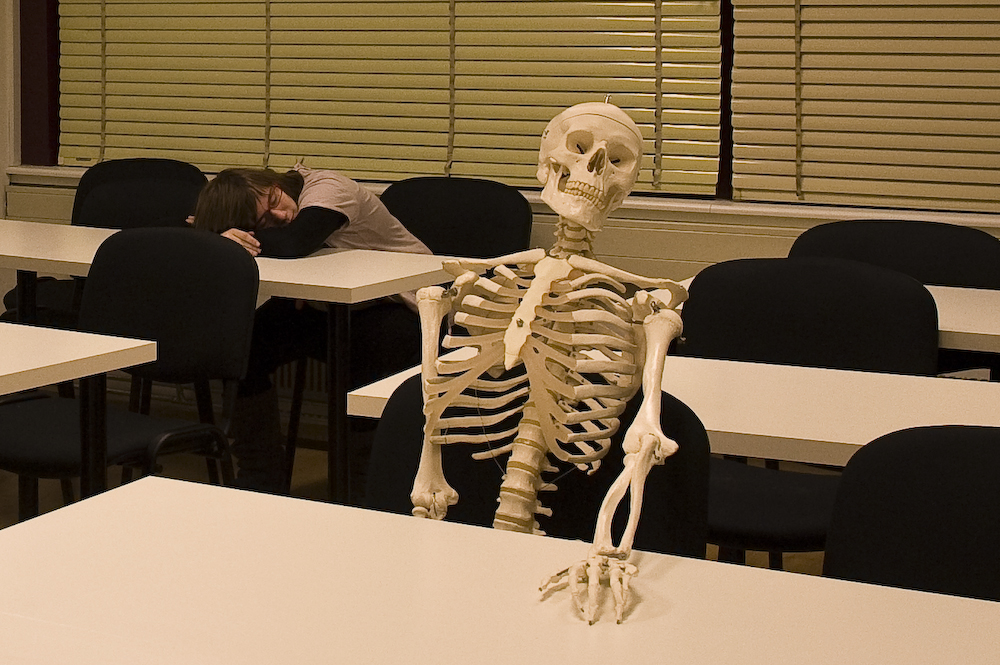
All this made me wonder, "If the teacher is having fun, the students are _________!"
Sunday, July 8, 2012
#SCed Network
Before I set out why I am so hellbent on starting #SCed, let me tell you my "Twitter-estimony" (I made that up!).
I joined Twitter a couple of years ago to keep up-to-date with Gamecock sports and local and world news. My wife and I had just decided to cancel cable, so I needed a way to stay connected. I have never been a huge Facebook lover, so I needed something different. I chose Twitter and am glad that I did. The first people I followed were all sports and news related until I sought out @johntspencer after following his blog for a short while. Honestly, this opened the door to something that was simply breathtaking.
I began to read John's tweets, then began to read responses and dialogue he was having with fellow educators all over the world. Much of the dialogue was what I called "challenge based". He was not looking for echo-chambers, but for people to challenge his ideas. Great thing about it, John wasn't alone. I started turning over more and more rocks, and found more and more AMAZING educators with a unbridled passion for learning. Soon after that I figured out hashtags and began watching #edchat, #edtech, #4thchat, and #5thchat very closely. Not long after that, I was introduced to the #140edu conference.
I remember sitting in my family's lake house on beautiful Lake Murray in Lexington, SC watching 2 presentations. One was on the power of Wikispaces in the classroom and the other was EduTecher aka Adam Bellow's presentation on Educational Tech Commandments. I was absolutely hooked.
I am a learner at heart. I tried my best to convince my students that I was probably the least intelligent being in the classroom. I was just a 30 year-old kid wanting to learn as much as possible about math, science, reading, and writing. Twitter was my grown up inlet for learning. The professional development on Twitter is both priceless and price-LESS (...seriously, it comes with no price...FREE...beat that)! It is also not necessarily limited by time. Discussions are archived so if you cannot be there for real time, just come back when you can and catch up! Finally, it's not limited by space. I can communicate with people half way across the world and people in the same room simultaneously.
Since it's now been a solid year since I have been diving into Twitter for professional purposes, I have been around the block a few times, but am still finding so many cool and amazing people, learning communities, organizations, products, groups, etc. The thing that has amazed me over everything else is the fact that teachers that buy into professional learning through a medium like Twitter are usually educators that are worth listening to. However, I have been hard pressed to find a ton of other South Carolina educators that have tapped into the professional benefits of Twitter.
 This leads me to why I want to start #SCed.
I have served in the education field for six years. Throughout my time as a South Carolina educator, I have been very impressed with a ton of things that the state does to support teachers. Of course, nothing is ever perfect, but I would say for the most part, South Carolina has a foundation on which to build. I think this is where #SCed could be very valuable.
Times are changing in education, especially in South Carolina (Common Core, merit based pay, etc.). As Will Richardson said in a recent blog post we must "redifine better". It is time for South Carolina educators (especially the ones that are worth listening to) to come together in order to connect, collaborate, and encourage to make the education in South Carolina better by making it different!
#1 - Connect - #SCed will be used to connect educators from all over the great state of SC. This Google doc is being passed around so you can link your twitter account so other SC educators can find you. There are directions on how to do this on the doc.
#2 - Collaborate - #SCed will be used to collaborate vertically and horizontally so we can share ideas, thoughts, and beliefs. Likewise, when ideas, thoughts and beliefs are shared they will also be rightfully and respectfully challenged. This will be a forum to do just that!
#3 - Encourage - #SCed will be used as a tool to encourage (NOT gripe to) each other. We all know that SC is a poverty stricken state. I could link to article after article that tells us how hard we have it. I don't have to tell you how hard it is. We need to be encouraged by fellow educators that are in the trenches with us, because what we do as educators matters to THAT child. Our passions for teaching and learning will simply breed more passion.
#SCed might be a complete waste of time. It might never get going, or it might get shut down before it starts. However, the people of SC deserve only the best. Educators that connect, collaborate, and encourage are the ones that will not only make SC better, but will make it great.
I look forward to connecting with you soon!
Chris
I joined Twitter a couple of years ago to keep up-to-date with Gamecock sports and local and world news. My wife and I had just decided to cancel cable, so I needed a way to stay connected. I have never been a huge Facebook lover, so I needed something different. I chose Twitter and am glad that I did. The first people I followed were all sports and news related until I sought out @johntspencer after following his blog for a short while. Honestly, this opened the door to something that was simply breathtaking.
I began to read John's tweets, then began to read responses and dialogue he was having with fellow educators all over the world. Much of the dialogue was what I called "challenge based". He was not looking for echo-chambers, but for people to challenge his ideas. Great thing about it, John wasn't alone. I started turning over more and more rocks, and found more and more AMAZING educators with a unbridled passion for learning. Soon after that I figured out hashtags and began watching #edchat, #edtech, #4thchat, and #5thchat very closely. Not long after that, I was introduced to the #140edu conference.
I remember sitting in my family's lake house on beautiful Lake Murray in Lexington, SC watching 2 presentations. One was on the power of Wikispaces in the classroom and the other was EduTecher aka Adam Bellow's presentation on Educational Tech Commandments. I was absolutely hooked.
I am a learner at heart. I tried my best to convince my students that I was probably the least intelligent being in the classroom. I was just a 30 year-old kid wanting to learn as much as possible about math, science, reading, and writing. Twitter was my grown up inlet for learning. The professional development on Twitter is both priceless and price-LESS (...seriously, it comes with no price...FREE...beat that)! It is also not necessarily limited by time. Discussions are archived so if you cannot be there for real time, just come back when you can and catch up! Finally, it's not limited by space. I can communicate with people half way across the world and people in the same room simultaneously.
Since it's now been a solid year since I have been diving into Twitter for professional purposes, I have been around the block a few times, but am still finding so many cool and amazing people, learning communities, organizations, products, groups, etc. The thing that has amazed me over everything else is the fact that teachers that buy into professional learning through a medium like Twitter are usually educators that are worth listening to. However, I have been hard pressed to find a ton of other South Carolina educators that have tapped into the professional benefits of Twitter.
I have served in the education field for six years. Throughout my time as a South Carolina educator, I have been very impressed with a ton of things that the state does to support teachers. Of course, nothing is ever perfect, but I would say for the most part, South Carolina has a foundation on which to build. I think this is where #SCed could be very valuable.
Times are changing in education, especially in South Carolina (Common Core, merit based pay, etc.). As Will Richardson said in a recent blog post we must "redifine better". It is time for South Carolina educators (especially the ones that are worth listening to) to come together in order to connect, collaborate, and encourage to make the education in South Carolina better by making it different!
#1 - Connect - #SCed will be used to connect educators from all over the great state of SC. This Google doc is being passed around so you can link your twitter account so other SC educators can find you. There are directions on how to do this on the doc.
#2 - Collaborate - #SCed will be used to collaborate vertically and horizontally so we can share ideas, thoughts, and beliefs. Likewise, when ideas, thoughts and beliefs are shared they will also be rightfully and respectfully challenged. This will be a forum to do just that!
#3 - Encourage - #SCed will be used as a tool to encourage (NOT gripe to) each other. We all know that SC is a poverty stricken state. I could link to article after article that tells us how hard we have it. I don't have to tell you how hard it is. We need to be encouraged by fellow educators that are in the trenches with us, because what we do as educators matters to THAT child. Our passions for teaching and learning will simply breed more passion.
#SCed might be a complete waste of time. It might never get going, or it might get shut down before it starts. However, the people of SC deserve only the best. Educators that connect, collaborate, and encourage are the ones that will not only make SC better, but will make it great.
I look forward to connecting with you soon!
Chris
Friday, July 6, 2012
The Book on Leadership
I just finished John MacArthur's "The Book on Leadership". As many of you know, John MacArthur is a very prominent American pastor of Grace Community Church in Sun Valley, California. This book was entirely based on the leadership principles observed through the interactions of the Apostle Paul. Before you simply tune out thinking that this is a strictly "Christian" book (which in some ways it is), the leadership principles presented are universal. The Apostle Paul is a very influential leader in a religious movement that is still being carried out today. Just as Ghandi, Mother Theresa, and George Washington deserve merit for their qualities, I believe Paul deserves some love for his leadership as well.
 Pastor MacArthur starts his book by discussing the amazing leadership influence that Paul demonstrated during a ship wreck. He was not a leader, but instead a prisoner on this particular ship. As the story goes and the storm grows, Paul becomes more than just a man in shackles, but a vocal leader that even the centurions begin to defer to. After the shipwreck, all 200 some odd people on board are counted as alive and well thanks to the leadership qualities Paul executed.
After the shipwreck commentary, Pastor MacArthur frames more leadership principles by analyzing Paul's second letter to the church in Corinth. Many things were beginning to turn south in the church that Paul founded. Paul was no longer in Corinth, but had moved forward to other missionary endeavors. Paul, however, had a huge heart for the people of Corinth and knew that with the right guidance, amazing things could happen. His boldness, wisdom, and humility expressed in his letter refocused the church, quieted false prophets and naysayers, challenged reckless behavior, boldly restated the mission and vision of the church, and encouraged all involved. Pretty impressive considering this was a letter, not face-to-face contact. If all this was accomplished through a letter, imagine the influence if Paul was present in body! His leadership was impressive.
The 26 Leadership Principles that John MacArthur gathered from Paul are:
Reflections:
I have to say that reading about each of these principles is humbling enough, but when you write them out so you can see them all at one time it is breathtaking. After seeing all of these principles together, I am humbled knowing that these are the traits of a solid leader. In my mind, I can picture a leader bestowing many of these traits. That leader is someone that many will follow. To reach this level will take much discipline and reflection. I have a ton of work to do! Hope you enjoy the book as much as I did!
Paul was a many of humble appearance. Some say he was even possibly a hunchback. Leaders of our day are usually where they are due to looks and surface level achievements. However, true leadership stems from below the surface. Scanning the list of principles proves that the majority of leadership is completed between the ears and inside the heart. I will need to start in and continue to return these two places in order to effectively lead others.
Finally, Paul's boldness was evident throughout the entire book. I quickly defer to others and shift blame and responsibility when the going gets tough. Paul's boldness is a great example for me and my timidity.
After the shipwreck commentary, Pastor MacArthur frames more leadership principles by analyzing Paul's second letter to the church in Corinth. Many things were beginning to turn south in the church that Paul founded. Paul was no longer in Corinth, but had moved forward to other missionary endeavors. Paul, however, had a huge heart for the people of Corinth and knew that with the right guidance, amazing things could happen. His boldness, wisdom, and humility expressed in his letter refocused the church, quieted false prophets and naysayers, challenged reckless behavior, boldly restated the mission and vision of the church, and encouraged all involved. Pretty impressive considering this was a letter, not face-to-face contact. If all this was accomplished through a letter, imagine the influence if Paul was present in body! His leadership was impressive.
The 26 Leadership Principles that John MacArthur gathered from Paul are:
- A leader is trustworthy
- A leader takes initiative
- A leader uses good judgement
- A leader speaks with authority
- A leader strengthens others
- A leader is enthusiastic and optimistic
- A leader never compromises the absolutes
- A leader focuses on objectives not obstacles
- A leader empowers by example
- A leader cultivates loyalty
- A leader has empathy for others
- A leader keeps a clear conscience
- A leader is definite and decisive
- A leader knows when to change his mind
- A leader does not abuse his authority
- A leader doesn't abdicate his role in the face of opposition
- A leader is sure of his calling
- A leader knows his own limitations
- A leader is resilient
- A leader is passionate
- A leader is courageous
- A leader is discerning
- A leader is disciplined
- A leader is energetic
- A leader knows how to delegate
- A leader is Christlike
Reflections:
I have to say that reading about each of these principles is humbling enough, but when you write them out so you can see them all at one time it is breathtaking. After seeing all of these principles together, I am humbled knowing that these are the traits of a solid leader. In my mind, I can picture a leader bestowing many of these traits. That leader is someone that many will follow. To reach this level will take much discipline and reflection. I have a ton of work to do! Hope you enjoy the book as much as I did!
Paul was a many of humble appearance. Some say he was even possibly a hunchback. Leaders of our day are usually where they are due to looks and surface level achievements. However, true leadership stems from below the surface. Scanning the list of principles proves that the majority of leadership is completed between the ears and inside the heart. I will need to start in and continue to return these two places in order to effectively lead others.
Finally, Paul's boldness was evident throughout the entire book. I quickly defer to others and shift blame and responsibility when the going gets tough. Paul's boldness is a great example for me and my timidity.
Monday, July 2, 2012
Choosing a school

Photo link
Today I received an email from a very dear friend that has relocated to the Washington DC area. Their son is nearing school age and they are looking for the "perfect" school. Here's his email:
We're looking at neighborhoods and schools in our area so that we'll be one step closer to buying once our house in Columbia sells. I thought recently that I don't necessarily know what the most important factors are for choosing a school. Many of the schools in Fairfax County, VA (most likely where we'll be living) are good schools, but I was wondering if you had any thoughts on which factors would have the most significant impact on a child's education - possibly factors like class size, training of teachers, standardized test scores, etc. Also, if you know of any good websites or publications that rank schools, my wife and I would be interested in that as well.
This email really got my motor running. What makes a great school? How would I, as a parent with no background in the everyday world of education, determine what school is best for my child?
My response:
I think first and foremost you need to gauge the climate of a school. To do this you need to take into consideration the outer appearance as well as the inside. How inviting is the school when you drive up, approach, and walk in. Remember you will go into the school only a handful of times each year, your son will venture in each and every school day. Call and make an appointment with the administrator to feel them out. Ask to tour the school and possibly sit in on a few classes from all grade levels. Don't forget that some districts' zoning policies, liken attending schools to an arranged marriage (or a gang), it's not easy to get out once you're in and you don't have much of a choice. Think long term. As you move throughout the school pay very close attention to how the students and adults interact. Are the interactions something that you're comfortable with? As you move throughout the school, continue to pay attention to the physical environment of the school making sure that you're looking past the "fairy tale & pixie dust" bulletin boards and cutesy displays. Are the children and THEIR hard work being valued and on display throughout the school? Gauge the teachers' attitudes as they facilitate learning in their class. One of my professors in college wisely said, "if you're bored, the kids are dead!" Talk with support staff as you tour, great work places generate amazing energy - you be the judge. If a school doesn't pass the climate test, don't go any further!
Second, I would begin to dive into the academic side. One thing that the current push towards standards and accountability has done is that it makes it easy to see if content is being taught. A quick glance at test scores can answer the question of "are they teaching the students" with very little brain power. Once that is determined, you must decide on the instructional method that fits your son the best. You must honestly ask the question, "how best does he learn?" One great thing about research is that its given every school a reason to try a "best practice" of teaching. I place best practice in quotations because what may be great for your son may be a nightmare for my daughter. You can gauge instructional practices by watching several classroom teachers interact through the course of a lesson. Where is the teacher located? What are the students doing? How many students are working together at any given time? Does the learning community feel chaotic, but the students are engaged or not engaged? Is everything very rigid a structured? No matter what, you must decide what fits your child the best?
Third, a school is also charged with the requirement to prepare students (K-12) with skills that will allow them to "work jobs that have yet to be created, to solve problems that have yet to be discovered, with technology that has yet to be invented." How is the school that you are interested in going about doing this with the uses of technology in the classroom? Be careful to not get the "bug to a bug zapper" mentality when you hear/see iPads or 1-to-1 integration or computer labs. Ask the question, how is technology being used in this school to increase the level or rigor (higher order thinking skills)?
Finally, How does the school interact and communicate with parents and the outside community. If you find a school that understands that they are but a microcosm of the larger community, then you've found a school that gets "it". How does the school involve parents beyond the typical PTO functions? How does the school serve and reach out to the the highest of the high and the lowest of the low? Also, how does the school participate in the community through service opportunities? (personal belief: I believe that a neighborhood does not make a school, a school makes a neighborhood.)
I would love to hear feedback and what you think parents should look for when searching out a school that fits their child's needs.
Monday, May 14, 2012
Finally clarification...
The other day I read this blog post by Dr. Scott McLeod. It's very short...heck, I'll just copy and paste it and give him full credit for finally clarifying my struggles as an educator. The reason behind all the nights I have laid in bed tossing and turning struggling with teaching and learning could possibly be summed up in this short blog post.
"How do you reconcile…
principles of standards-based grading; “begin with the end in mind and work backwards;” understanding by design; and other more convergent learning ideas
with…
project-, problem-, challenge-, and/or inquiry-based learning; creativity; innovation; collaboration; and our need for more divergent thinkers?
How do (or would) you reconcile these potentially-conflicting concepts? How should schools navigate the tension between convergence and divergence?" - Dr. McLeod
I have taught for 6 years at a school for inquiry. However, I have rarely felt that I have been encouraged to teach with a divergent mindset. I have always wanted to, but I have always been pushed towards convergence. Standards preach divergence, but practice convergence. Administrators want the beauty of divergence, but coach towards convergence. Even I long for and LOVE to see the beauty that stems from divergence, true learning, yet I am often weighted down by the restriction of convergent standards.
As a learning leader next year, how will I "reconcile these potentially-conflicting concepts" with the teachers at my school?
Subscribe to:
Posts (Atom)